Onlus
The Project
Sextantio Foundation: the socio-health project in Rwanda
The Sextantio E.T.S. Foundation aims to improve socio-health conditions in developing countries.
In Rwanda, the Foundation supports the payment of healthcare coverage through the Mutuelle de Santé – Community-Based Health Insurance (CBHI) system for individuals and families in conditions of particular economic vulnerability who would otherwise be unable to afford the cost of insurance independently.
The objective is simple: to enable the poorest people to access primary care promptly and reduce the risk that a treatable illness becomes, due to financial constraints, a serious or lethal situation.
The healthcare context in Rwanda
Following the 1994 genocide against the Tutsi, Rwanda initiated a major process of reconstructing its healthcare system, building an extensive network of health facilities and progressively introducing community health insurance schemes.
The Community-Based Health Insurance (CBHI) system, commonly known as Mutuelle de Santé, was developed progressively starting from the health insurance policies drafted in the early 2000s and subsequently rolled out nationwide. The nationwide expansion of the Mutuelles was consolidated in the second half of the 2000s.
Today, healthcare coverage in Rwanda is significantly higher than when the Sextantio project began.
According to official Rwandan data for 2023/24, 85.3% of the population had health insurance. Among those insured, Community-Based Health Insurance accounted for approximately 93% of coverage.
Ministry of Health data further indicates that in 2023/24, the CBHI covered approximately 83.5% of the total population, representing about 92% of all insured individuals.
These figures demonstrate the scale achieved by the Rwandan health system, as well as the importance of continuing to support segments of the population that remain economically most vulnerable.
How much the Mutuelle de Santé costs
The CBHI system currently applies tiered contributions based on socio-economic category.
For Category I, reserved for individuals without income, the annual contribution is 4,000 Rwandan Francs per person and is fully covered by the Government.
For Category II, the contribution is also 4,000 Francs per person: 3,000 Francs are paid by the insured individual and 1,000 Francs are covered by the Government.
Subsequent categories involve higher contribution fees.
The system allows insured individuals to access a range of services at affiliated health facilities, including care at health posts and health centres, as well as hospital and higher-level services according to established procedures.
It is therefore important to emphasize that the value of the project lies not merely in the relatively small amount of the insurance premium, but above all in making access to the health system possible for people who, without support, would risk foregoing medical care.
Identification of beneficiaries
The Sextantio project targets the most economically vulnerable individuals.
Over the years, the identification of beneficiaries has been carried out in collaboration with local structures, communities, and Caritas, following procedures designed to identify families unable to cover the cost of insurance independently.
The criteria applied, with assistance from the RSSB, have taken into account family composition, living conditions, available resources, and the family’s ability to meet basic needs, among other factors.
The methodology adopted by the project has also included subsequent verification checks to ensure that resources allocated for health coverage effectively reach the individuals identified as beneficiaries.
Over time, the project has sought to maintain a strong focus on transparency regarding beneficiary selection and fund allocation.
Sextantio’s commitment
Sextantio’s involvement in Rwanda began in 2008 with an initial pilot project that guaranteed health coverage to approximately 8,000 people.
The initiative subsequently expanded:
From 2008 to 2026, Sextantio supported 442,370 beneficiaries.
The role of the Foundation
The project was initially launched using internal resources and was later supported through fundraising activities.
The current goal is to build a more stable and continuous funding model in which economic activities linked to the Rwanda project can contribute over time to supporting socio-health operations.
In particular, the tourism project developed by Sextantio on Nkombo Island was also designed as a mechanism to generate resources for social and health initiatives. Sextantio’s own documentation describes the idea of directing profits from the hospitality business toward supporting health insurance for destitute populations.
Results and impact
The Sextantio project is part of a broader transformation process within the Rwandan healthcare system.
It is therefore important not to attribute improvements in national health indicators exclusively to the Sextantio Foundation, as these are the result of numerous factors: public policies, health facility development, vaccinations, malaria and HIV programs, maternal and child healthcare, healthcare staff training, health insurance, and contributions from various national and international organizations.
Sextantio’s specific contribution consists of funding health insurance access for individuals who would otherwise risk exclusion.
Child mortality
Child mortality is expressed per 1,000 live births.
The most recent data from the Rwanda Demographic and Health Survey 2025 indicates:
Neonatal mortality: 17 per 1,000 live births;
Infant mortality: 27 per 1,000 live births;
Under-five mortality: 36 per 1,000 live births.
The same survey shows that under-five mortality dropped from 45 per 1,000 in 2020 to 36 per 1,000 in 2025.
Delivery assistance and maternal health
According to data from Rwandan demographic and health surveys, approximately 28.2% of births took place in a health facility in 2005. By 2014/15, this figure had risen to approximately 90.7%.
The most recent figure is even higher: the RDHS 2025 indicates that 98% of births occurred in a health facility assisted by skilled personnel.
Here again, this improvement reflects the progress of the entire Rwandan health system and cannot be attributed solely to Sextantio.
Malaria
Malaria remains one of the conditions where timely access to diagnosis and treatment is of vital importance.
Nationally, the Ministry of Health reported a sharp decline in malaria incidence, falling from 308 to 45 cases per 1,000 inhabitants over the period covered by the previous Health Sector Strategic Plan.
A continuously evolving health system
The achievements made by Rwanda over the past two decades are significant.
According to the Ministry of Health, maternal mortality dropped from 210 to 105 deaths per 100,000 live births between 2014/15 and 2023; during the same period, several indicators related to neonatal health, malaria, and delivery assistance also improved.
The RDHS 2025 confirms the continuation of this progress: maternal mortality decreased to 149 deaths per 100,000 live births, compared to 203 in 2020, while under-five mortality declined to 36 per 1,000.
These results demonstrate the transformation of the Rwandan healthcare system, driven by public policy alongside numerous local and international partners.
An ongoing challenge: high-cost illnesses
Basic health insurance serves as an essential tool for access to care, but it does not eliminate all financial burdens associated with healthcare.
In particular, oncological conditions and other complex illnesses requiring specialized diagnostics, advanced treatments, or expensive therapies present a significant challenge for patients and the healthcare system alike.
For this reason, the Sextantio project intends to maintain its primary focus on basic care access for the most vulnerable, while simultaneously evaluating potential future initiatives in collaboration with institutions and health facilities.
Future outlook
Rwanda has built one of the most extensive community-based health insurance systems in Sub-Saharan Africa.
Today, however, the context differs from that of 2008: national health coverage is far broader, and the public system fully subsidizes the CBHI Category I contribution.
The role of the Sextantio project must therefore evolve in step with the national health system.
The goal is not to replace the State, but to complement the public system where individuals and families remain vulnerable or at risk of exclusion due to their economic circumstances.
The Foundation also intends to seek institutional funding and partnerships that can ensure continuous support for the destitute.
A further objective is to establish a more structured monitoring and impact evaluation system by collecting data on insured individuals, healthcare service utilization, and primary conditions treated.
This will enable a transition from simply tracking the number of funded insurance policies to measuring the concrete health outcomes within beneficiary communities.
A potentially replicable model
Sextantio’s experience is grounded in a simple principle: a modest financial contribution can enable an extremely impoverished individual to enter the healthcare system and receive care they might otherwise be unable to obtain.
The project does not seek to replace the national health system, but rather to step in and support the most vulnerable populations.
The expertise gained since 2008 can also provide useful insights for designing similar models in other low-income countries, adapted to local institutional, economic, and healthcare conditions.
The ultimate goal is to build a model where economic activity, social responsibility, and healthcare access mutually reinforce each other, establishing a lasting source of funding for the most vulnerable communities.
How to Help
You can support Sextantio Onlus through:
– Bank Transfer: Payable to C/C SEXTANTIO ASSOCIAZIONE DI PROMOZIONE SOCIALE – IBAN: IT33E0542477431000001000409.
– 5×1000 (Tax Donation): Use the Sextantio tax code: 91180090689.
– Donations are tax-deductible. For more information: onlus@sextantio.it.
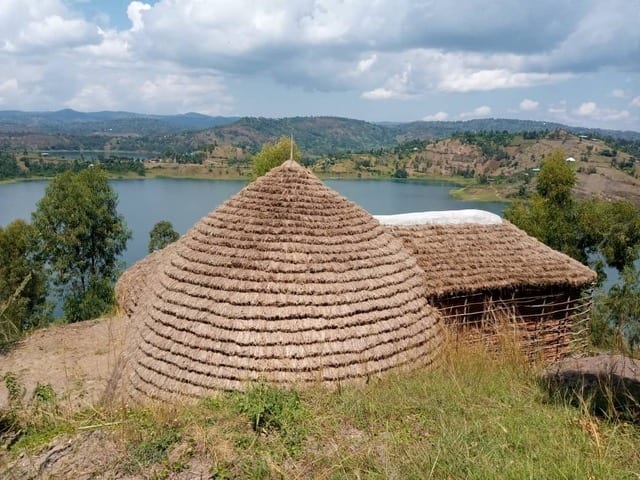
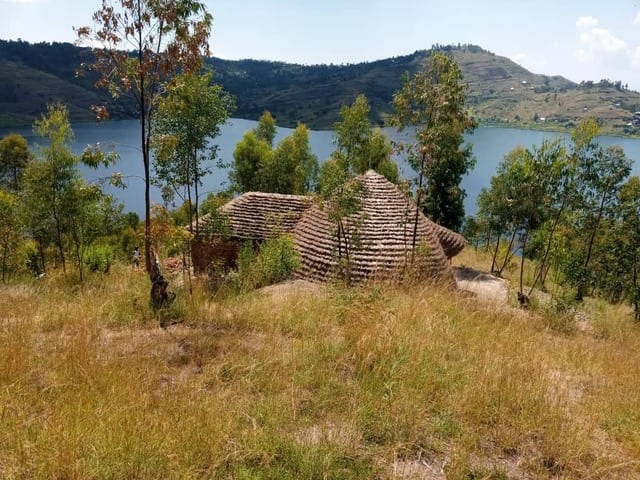
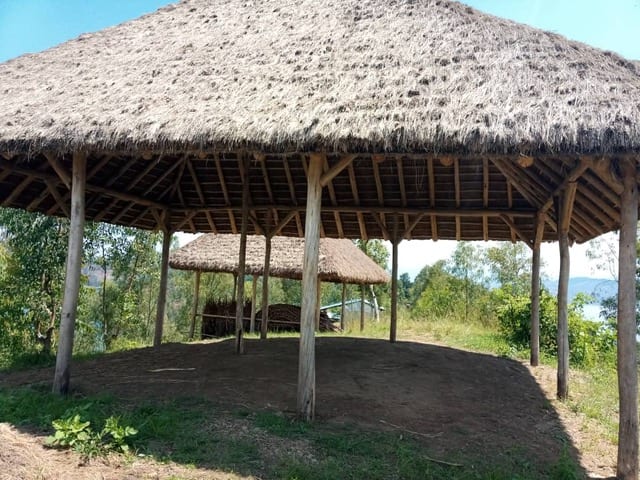
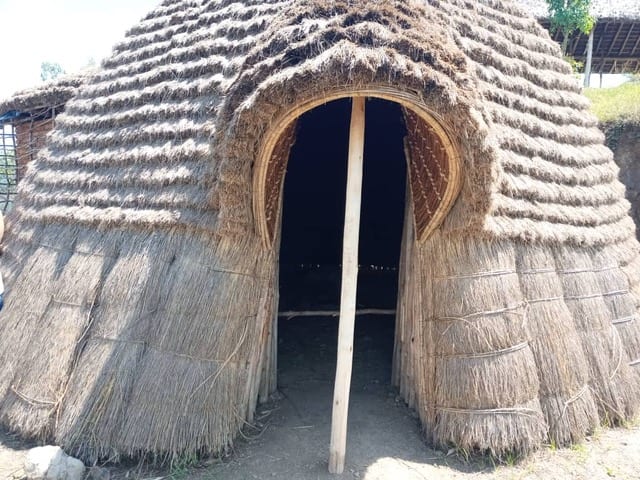
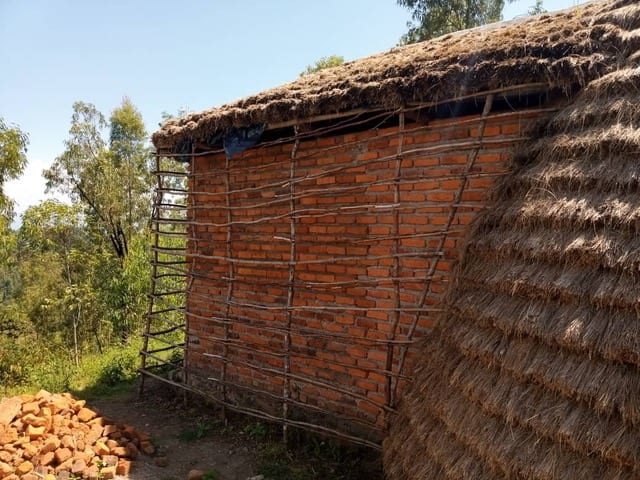
no-profit Project “Capanne - Huts”, Nkombo island, Kivu Lake, Rwanda.
We intend to re-purpose the identity concept behind the projects in the village of Santo Stefano di Sessanio and the Sassi in Matera with the same philosophy in another place of “marginality”, slightly further away, Nkombo Island, in Rwanda. A border island in Rwandan territory, inhabited mostly by Congolese populations dedicated to fishing, agriculture and sheep farming, whose economy is purely for livelihood. www.sextantiorwanda.com
The island’s inhabitants speak a specific dialect of this area, Mashi. Verbal memory maintains that pregnant but unmarried, or married but somewhat liberal Rwandese girls were thrown into the lake near the Fisherman’s Island. Some would be saved by these, but sentenced to an existence between domesticated collaborators and veritable slaves. The current population of the island was formed from the unions between the Congolese fishermen and these Rwandan girls.
The project for building huts starts on and is based on the material present in the Ethnographic Museum of the French-speaking capital of Rwanda, Butare. This is a museum that belonged to the King of Belgium and is now owned by the Rwandan state. These huts are not dissimilar to many others found in the mountains of the equatorial rainforest.
The area where the huts are built is located at the northern end of the island, the one furthest from the mainland, with the lowest population density and inhabited by a Muslim minority which, despite poverty, is characterized by some particularly graceful women’s clothes. As in the whole island, even in our huts the population will live on self-subsistence through agricultural production on our land and breeding activities that characterize the family’s economy. A very deep rooted tradition that goes beyond basic needs is the production of “banana beer”, a local fermented product that’s present in many areas of the western equatorial rainforest.
The only small trade will be the purchase of fish from local fishermen or the opportunity to take fish soups with them which are prepared for daily meals. Compared to the typical African resort, the local anthropological element becomes the element around which the whole experience revolves. The attempt, even in this third experience and even more dramatically than the previous two, is to prevent tourism from disrupting the subtle socio-cultural balance of the area. In an island that saw western operators linked to NGOs come only a few times a year, the socio-economic dimension of the project will articulate in dispensing health insurance policies which prevent, at very low cost treatable diseases, but which still have a high mortality rate.
Funded entirely by the members of the Sextantio Onlus Association, the management profits from this activity will go to the Association to support the project that’s been in place for more than a decade, providing health insurance to the most indigent people in the state of Rwanda, starting from the poor of the island.
The hut project will finance Health Insurance, but since paying for Insurance is considered to be the worst welfare economy in Rwanda, at the same time the objective pursued should be supporting local cooperatives for all purchases for the inhabitants of the huts. Goods such as, for example, the mats that serve as a mattress and the traditional furniture still produced by artisan carpenters’ shops can be requested from the numerous Cooperatives, asking that all their members purchase Health Insurance.
This operation would be very well seen by the existing paradigm, both in Rwanda and more generally in International Cooperation, for many reasons, because it would mean generating revenue through the insurance purchased.
I am perhaps a bit old-school and with “Illuminist” heritage, because I think that at least for some groups of people who are objectively in economic difficulty, health insurance should be an inalienable right from birth.
When the hotel becomes operational, the cooperatives will be able to give us the food products that we will not be able to produce directly on our land.
All these operations will be aimed at the most important objective of maintaining intact the socio-cultural balance originated, so as to preserve the dignity of the local populations, not transforming them into masses of beggars, as it happens in many African resorts. This will be the most difficult and fundamental challenge of a project that starts with the best intentions but that is highly experimental and with uncontrollable variables.